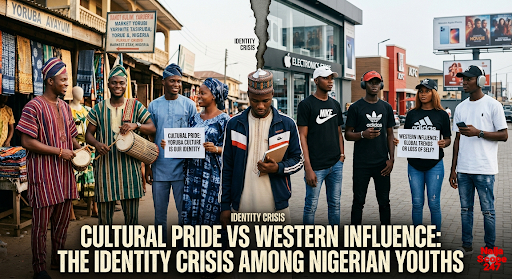

Nigeria is a nation rich in culture, tradition, and heritage. From language and fashion to food and values, the country boasts a diverse cultural identity that has stood the test of time. However, in today’s globalized world, many Nigerian youths find themselves caught between preserving their cultural roots and embracing Western influences. This tension has given rise to what can best be described as an identity crisis.
The Growing Influence of Western Culture
With the rise of the internet, social media, and global entertainment, Western culture has become more accessible than ever. Nigerian youths are constantly exposed to foreign lifestyles through movies, music, fashion trends, and celebrity culture.
From adopting foreign accents to dressing in Western styles, many young Nigerians are increasingly influenced by what they see online. Platforms like TikTok and Instagram have accelerated this trend, making it easier for global culture to shape local behavior.
While exposure to other cultures is not inherently negative, the challenge arises when it begins to overshadow local traditions and values.
Decline in Cultural Awareness
One noticeable effect of Western influence is the gradual decline in cultural awareness among Nigerian youths. Many young people struggle to speak their native languages fluently, and some even feel embarrassed to do so in public.
Traditional attire, once worn with pride, is now often reserved for special occasions. Indigenous music and folklore are losing ground to foreign entertainment, and cultural practices that once defined communities are slowly fading away.
This shift raises concerns about the long-term preservation of Nigeria’s rich cultural heritage.
The Pressure to “Fit In”
For many youths, the adoption of Western culture is driven by a desire to “fit in” and be seen as modern or sophisticated. There is often a perception that foreign lifestyles are more advanced or desirable, leading some to downplay their cultural identity.
This pressure is especially strong in urban areas, where trends spread quickly and social validation is often tied to appearance and behavior. As a result, some young Nigerians find themselves living a dual identity—one that reflects their cultural background and another that aligns with global trends.
The Positive Side of Cultural Exchange
It is important to note that Western influence is not entirely harmful. Cultural exchange can lead to innovation, creativity, and new opportunities. Nigeria’s entertainment industry, for example, has successfully blended local and foreign elements to create globally recognized content.
Afrobeats music, Nigerian fashion, and films have gained international attention, proving that cultural fusion can be a strength rather than a weakness. Many Nigerian youths are now redefining what it means to be both local and global, creating a unique identity that draws from both worlds.
Rediscovering Cultural Pride
In response to growing concerns, there is a renewed effort among some Nigerian youths to reconnect with their roots. Movements promoting indigenous languages, traditional fashion, and African history are gaining traction.
Social media, ironically, is also being used as a tool to promote cultural pride. Content creators are showcasing local cuisines, traditions, and stories, helping to revive interest in Nigerian heritage.
This shift suggests that the identity crisis is not permanent but part of an ongoing evolution.
Finding the Balance
The real challenge is not choosing between cultural pride and Western influence but finding a healthy balance between the two. Nigerian youths do not have to reject global culture to preserve their identity. Instead, they can embrace modernity while staying rooted in their traditions.
Parents, educators, and community leaders also have a role to play in this process. By teaching cultural values and encouraging pride in heritage, they can help young people develop a strong sense of identity.
Conclusion
The identity crisis among Nigerian youths reflects the broader impact of globalization on traditional societies. While Western influence continues to shape lifestyles and perspectives, it does not have to come at the expense of cultural heritage.
By embracing both worlds, Nigerian youths have the opportunity to create a dynamic and authentic identity—one that honors the past while engaging with the future. In doing so, they can ensure that Nigeria’s rich culture remains alive and relevant for generations to come.