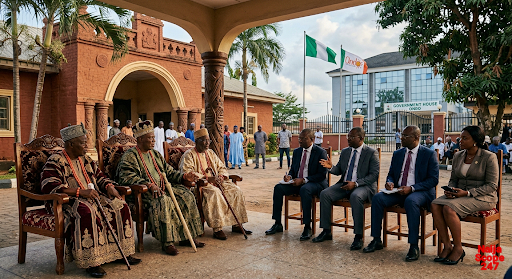

Nigeria’s political landscape is a unique blend of tradition and modernity. On one hand, the country operates a democratic system with elected officials at federal, state, and local levels. On the other hand, traditional rulers—such as Obas, Emirs, and Chiefs—continue to wield significant influence within their communities. This dual system raises an important question: in today’s Nigeria, who truly holds real power?
The Historical Authority of Traditional Rulers
Before colonial rule, traditional rulers were the primary authority figures in their domains. They governed their people, settled disputes, maintained order, and preserved cultural values. Their authority was deeply rooted in history, customs, and the trust of their people.
Even during colonial administration, traditional rulers were integrated into governance through indirect rule, further strengthening their influence. Although Nigeria has since transitioned into a democratic system, these institutions have not disappeared—they have simply evolved.
The Structure of Modern Governance
Modern Nigeria operates under a constitutional democracy where power is officially vested in elected leaders—presidents, governors, lawmakers, and local government officials. These individuals are responsible for policy-making, resource allocation, and national development.
In theory, traditional rulers do not hold constitutional power. They cannot make laws, control public funds, or enforce state policies. However, the reality on the ground often tells a more complex story.
The Influence of Traditional Rulers Today
Despite lacking formal political authority, traditional rulers remain highly influential, especially at the grassroots level. They serve as custodians of culture and are deeply respected by their communities.
Politicians frequently seek their endorsement during elections, recognizing their ability to mobilize support. A word from a respected monarch can sway public opinion and influence voting patterns in certain regions.
Traditional rulers also play key roles in conflict resolution, community development, and maintaining peace. In areas where government presence is limited, they often act as intermediaries between the people and the state.
Areas of Conflict and Overlap
The coexistence of traditional and modern systems is not without challenges. Conflicts sometimes arise over authority, jurisdiction, and recognition.
For instance, disagreements may occur between local government officials and traditional rulers over land matters, community leadership, or development projects. In some cases, politicians attempt to undermine traditional institutions, while in others, traditional rulers are accused of overstepping their boundaries.
These tensions highlight the lack of clear constitutional roles for traditional rulers in Nigeria’s governance structure.
Who Holds Real Power?
The answer depends on how power is defined. If power is viewed from a legal and constitutional perspective, then modern political leaders hold the real authority. They control state resources, make laws, and implement policies.
However, if power is measured by influence, legitimacy, and grassroots connection, traditional rulers still command significant respect and authority. Their ability to shape opinions and maintain social order gives them a different kind of power—one that cannot be easily dismissed.
The Case for Integration
Given their continued relevance, many have argued for a more defined role for traditional rulers within Nigeria’s political system. Some suggest incorporating them into advisory councils or formal governance structures, while others caution against politicizing traditional institutions.
The challenge lies in striking a balance—ensuring that traditional rulers contribute positively to governance without compromising democratic principles.
The Way Forward
For Nigeria to maximize the strengths of both systems, collaboration is essential. Governments should engage traditional rulers as partners in development, particularly in areas such as security, education, and conflict resolution.
At the same time, traditional rulers must remain neutral and avoid being overly entangled in partisan politics. Their credibility depends largely on their ability to serve all members of their communities, regardless of political affiliation.
Conclusion
The question of who holds real power in Nigeria does not have a simple answer. Modern political leaders may have constitutional authority, but traditional rulers continue to wield significant influence at the grassroots level.
Rather than viewing the relationship as a competition, it should be seen as a partnership. When properly aligned, traditional institutions and modern governance can work together to promote stability, unity, and development across Nigeria.
In the end, real power may not lie in titles or positions alone, but in the ability to lead, influence, and serve the people effectively.