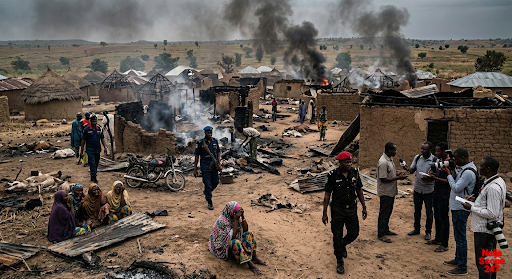

Abuja, Nigeria — A wave of fresh attacks across parts of Northern Nigeria has left at least 26 people dead, intensifying concerns over the country’s worsening security situation.
The incidents, which occurred over the weekend in multiple states including Benue, Kaduna, and Borno, involved coordinated assaults on communities and security personnel, according to local sources and officials.
Coordinated Attacks Across States
Reports indicate that gunmen targeted villages and security checkpoints, leading to significant casualties and destruction of property. In some areas, residents were forced to flee their homes amid fears of further violence.
While authorities are still investigating the attacks, early indications suggest the involvement of armed groups linked to ongoing insurgency and banditry in the region.
A Growing Security Crisis
The latest violence highlights the persistent security challenges facing Nigeria, where multiple threats continue to overlap. These include:
- Terrorist insurgency in the North-East
- Banditry and mass kidnappings in the North-West
- Farmer-herder clashes in the Middle Belt
Security analysts warn that the convergence of these threats is stretching the country’s security architecture to its limits.
Civilian Casualties Raise Alarm
The killing of civilians in the recent attacks has sparked outrage among residents and civil society groups, many of whom are calling for urgent government intervention.
Community leaders in affected areas say the frequency of attacks has increased in recent months, leaving many communities vulnerable and unprotected.
Military Response Under Scrutiny
The Nigerian military has reiterated its commitment to tackling insecurity and has reportedly launched operations in response to the attacks.
However, critics argue that despite repeated assurances, the security situation has not significantly improved, with attackers often returning even after military operations.
Experts point out that while military force is necessary, it may not be sufficient to address the complexity of Nigeria’s security challenges.
Regional Implications
There are also growing concerns about the spillover effects of conflicts in the Sahel region, where extremist groups have intensified their activities.
Analysts warn that instability in neighboring countries could further complicate Nigeria’s security landscape if not properly managed.
Calls for Urgent Action
Security experts and stakeholders are urging the government to adopt a more comprehensive approach, including:
- Strengthening intelligence networks
- Improving border security
- Enhancing collaboration with local communities
- Addressing socio-economic drivers of violence
There are also renewed calls for state policing and decentralization of security operations to improve response times.
National Mood and Outlook
The latest attacks have deepened public anxiety, with many Nigerians questioning the effectiveness of current security measures.
As the country continues to grapple with multiple security threats, the need for a coordinated and sustained response has become more urgent than ever.
For now, affected communities remain on edge, hoping for swift action to prevent further loss of lives.